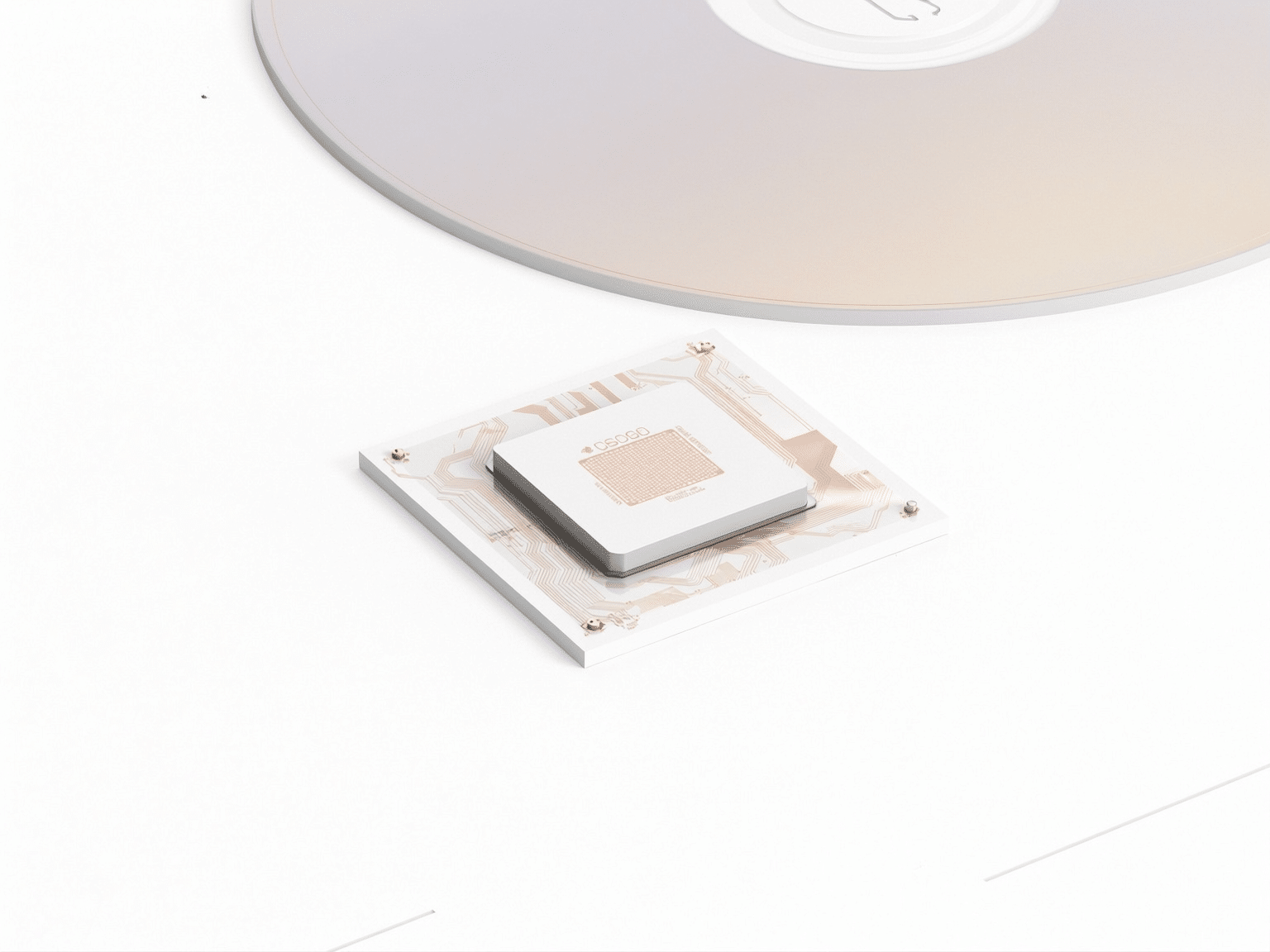


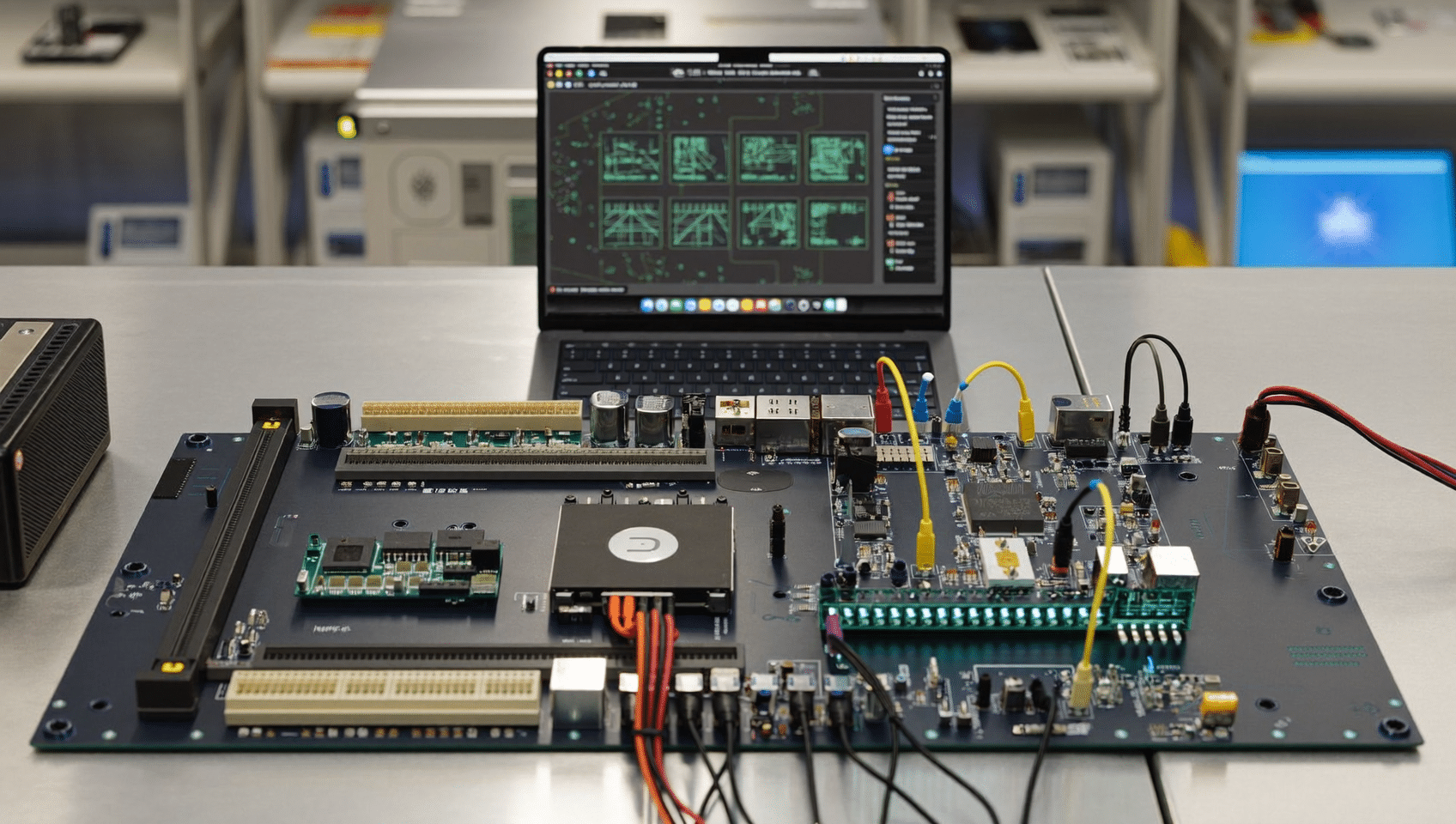
Embedded and FPGA systems built around the application.
Harmonie Design Labs develops embedded software, FPGA-based architectures, and system-level engineering solutions for industrial, measurement, sensor, and semiconductor development programs.
We support projects from early system definition and proof of concept through firmware development, FPGA implementation, hardware integration, testing, and application validation.
Our embedded and FPGA engineers can develop a complete subsystem, contribute to a defined technical area, or support the integration and evaluation of custom ASICs within the wider electronic system.
- Embedded system architecture
- Microcontroller and processor-based development
- Device-driver development
- FPGA architecture and implementation
- Firmware development and integration
- FPGA-based proof of concept
- ASIC prototyping on FPGA
- Hardware and firmware integration
- Communication-interface development
- Sensor and measurement-system integration
- Board bring-up and technical debugging
- Test automation and application validation
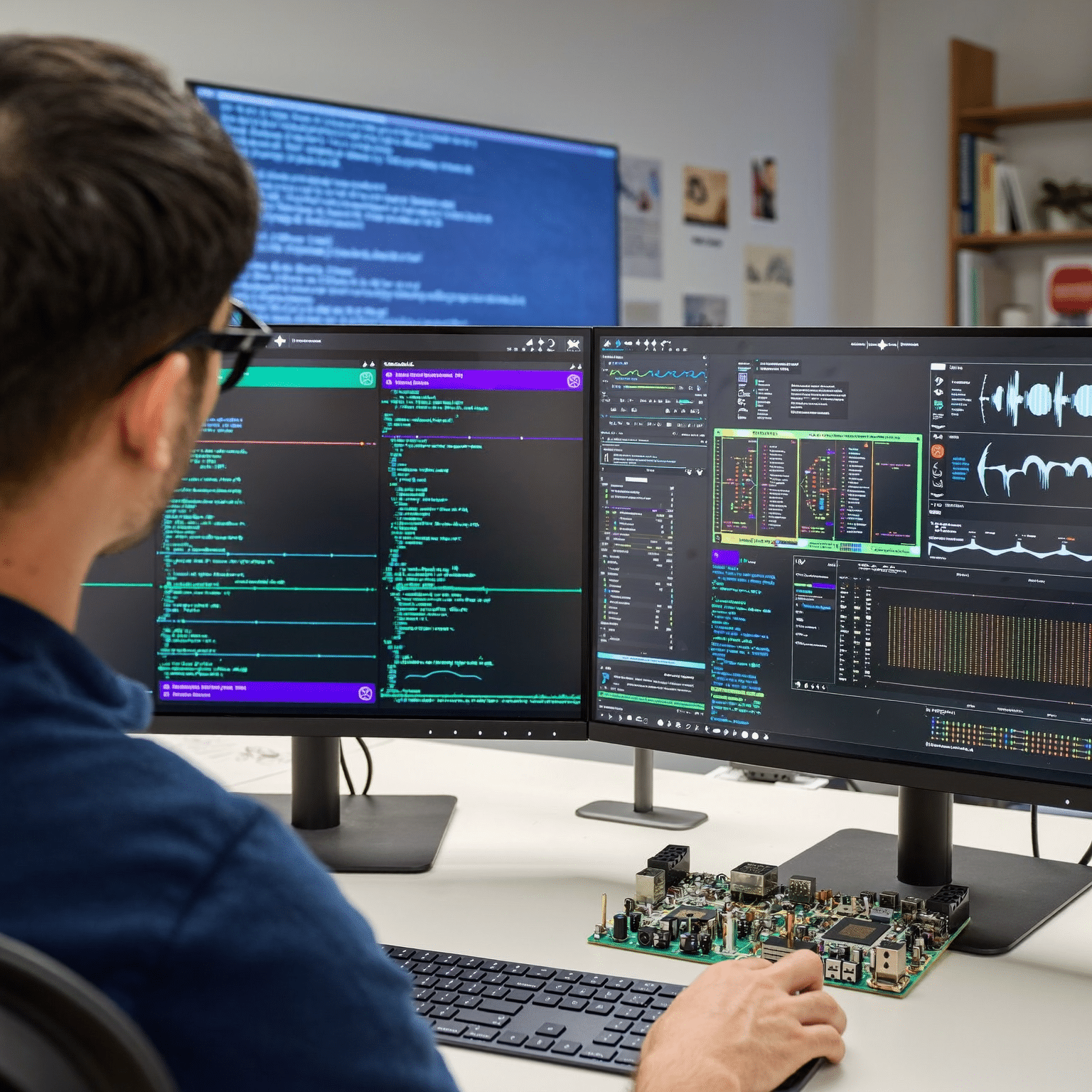
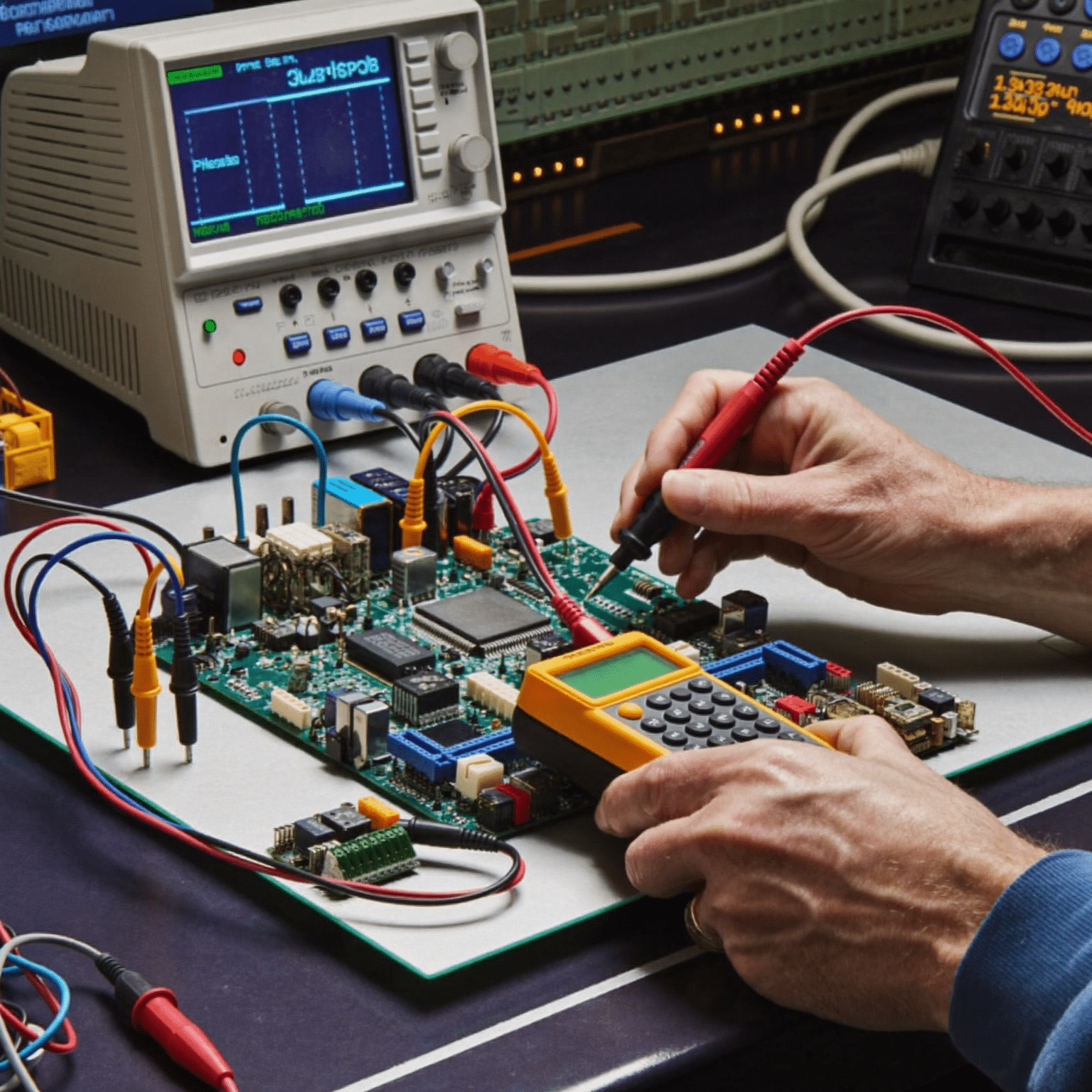
From system requirements to integrated hardware and firmware
Embedded systems depend on several engineering layers working together.
The processor, FPGA, custom IC, peripherals, communication interfaces, firmware, timing behaviour, and physical hardware must operate as one coordinated system.
Harmonie Design Labs approaches embedded and FPGA development from the complete application perspective. We define responsibilities between hardware, firmware, and programmable logic before implementation begins, reducing integration risk later in the project.
Define the System Architecture
We review the required functions, processing needs, interfaces, timing constraints, sensor inputs, control outputs, operating environment, power targets, and validation requirements.
Develop and Integrate
We implement the required firmware, FPGA logic, interfaces, control functions, and integration layers.Development progresses alongside target hardware or a representative prototype platform. Individual functions are tested before being integrated into the complete system.Where a custom ASIC is involved, the surrounding firmware and FPGA environment can be prepared before first silicon becomes available.
Bring Up and Validate the System
The integrated system is exercised under representative operating conditions.We assess communication, timing, data handling, control behaviour, error recovery, hardware interaction, and application-level performance.Unexpected behaviour is investigated across hardware, firmware, FPGA logic, and interface boundaries rather than treating each layer in isolation.
Embedded Software Engineering
Embedded software connects the electronic hardware to the intended application.
The firmware must manage device configuration, communication, timing, control functions, data handling, diagnostics, and error behaviour within the constraints of the target platform.
FPGA Engineering
FPGA platforms provide a flexible way to develop, integrate, and validate digital functionality before or alongside custom silicon.
The FPGA is treated as an engineering platform rather than automatically as the final product architecture. The appropriate implementation depends on performance, volume, power, cost, and product-lifecycle requirements.
Our FPGA engineering capability may support:
- Digital system prototyping
- ASIC architecture evaluation
- Interface implementation
- Sensor and measurement processing
- Timing and control functions
- Data acquisition
- Communication bridges
- Test and validation platforms
FPGA Prototyping for ASIC Development
FPGA prototyping can reduce technical risk before an ASIC reaches manufacturing.
Not every ASIC function can be represented exactly on FPGA. Technology-specific behaviour, physical timing, analog functions, and certain implementation details may require models or external emulation.
The prototype scope is therefore defined around the questions it needs to answer.
A prototype may allow customer and Harmonie engineering teams to:
- Evaluate system architecture
- Exercise digital functionality
- Develop embedded software early
- Test external interfaces
- Integrate sensors and peripheral hardware
- Validate data flow and control behaviour
- Demonstrate the application concept
- Prepare system-level tests before first silicon
Hardware and Firmware Integration
Many embedded-system issues do not belong exclusively to hardware or software.
A communication failure may result from firmware timing, FPGA logic, electrical conditions, reset sequencing, clock configuration, or an incomplete interface specification.
Our integration approach evaluates these layers together.
This cross-domain approach is particularly valuable when integrating custom ASICs, sensor electronics, or timing-sensitive measurement systems.
Typical integration activities include:
- Board power-up and initial checks
- Clock and reset configuration
- Processor and FPGA communication
- ASIC register access
- Sensor and peripheral initialization
- Interface timing analysis
- Data-path validation
- Interrupt and event handling
Flexible Engagement Models
Harmonie Design Labs can support embedded and FPGA projects through several engagement models.
Complete Embedded Subsystem
We develop the embedded architecture, firmware, FPGA functions, interfaces, and system-integration environment as one coordinated work package.
Firmware Development
We develop or extend firmware for an existing microcontroller, processor, FPGA-SoC, or customer hardware platform.
FPGA Design and Prototyping
We develop an FPGA-based function, subsystem, proof of concept, or ASIC-prototyping platform.
ASIC Integration Support
We develop the firmware, control logic, interface software, and evaluation environment required to integrate a custom ASIC into the wider electronic system.
Existing System Review
We assess an existing embedded or FPGA architecture for integration risks, performance limitations, interface issues, maintainability, and development readiness.
Customer-Team Extension
Our engineers work within the customer’s existing hardware, firmware, source-control, review, testing, and documentation environment.
Why System-Level Integration Matters
Individual components can perform correctly while the complete system still fails to meet its requirements.
Common integration risks include:
- Incomplete hardware and software partitioning
- Interface assumptions that differ between teams
- Incorrect power-up or reset sequencing
- Timing behaviour that changes under real workloads
- Firmware developed without representative hardware
- FPGA logic that is difficult to integrate or maintain
- Inadequate diagnostic and debug access
- Communication errors under boundary conditions
- Calibration routines disconnected from device behaviour
- Late discovery of system-level performance limitations
Coordinating firmware, FPGA logic, hardware, and custom silicon from the beginning reduces these risks.
The objective is not simply to deliver working code or programmable logic. It is to deliver an integrated engineering system that performs according to the intended application.
Frequently asked questions
Embedded engineering may include system architecture, microcontroller or processor selection, firmware development, device drivers, communication interfaces, hardware integration, debugging, and application validation.
Yes. Depending on the project, we can develop firmware, FPGA logic, or the complete integration between both domains.
Yes. Suitable digital portions of an ASIC can be implemented on FPGA for architectural evaluation, interface testing, early firmware development, or system-level validation.Not all ASIC behaviour can be replicated exactly on FPGA, so the prototype scope must be defined carefully.
Yes. Firmware development can begin using an FPGA prototype, behavioural model, emulation platform, development board, or interface abstraction before first silicon becomes available.
Yes. We can evaluate and work with an existing board, processor, FPGA platform, firmware codebase, interfaces, and development environment.
Yes. We can support power-up, clock and reset checks, communication testing, processor and FPGA configuration, ASIC access, peripheral initialization, and technical debugging.
The two capabilities are related but have different emphasis.Digital & RTL Design focuses on synthesizable digital design and implementation for ASICs and SoCs. Embedded & FPGA Engineering focuses on programmable platforms, firmware, peripheral integration, prototyping, and the complete electronic system.
Our scope is defined according to the project. We can develop embedded and FPGA subsystems, prototypes, test platforms, and system-integration environments. Production-product responsibilities, certification, mechanical design, and manufacturing scope must be agreed separately.