

From first silicon to measured performance.
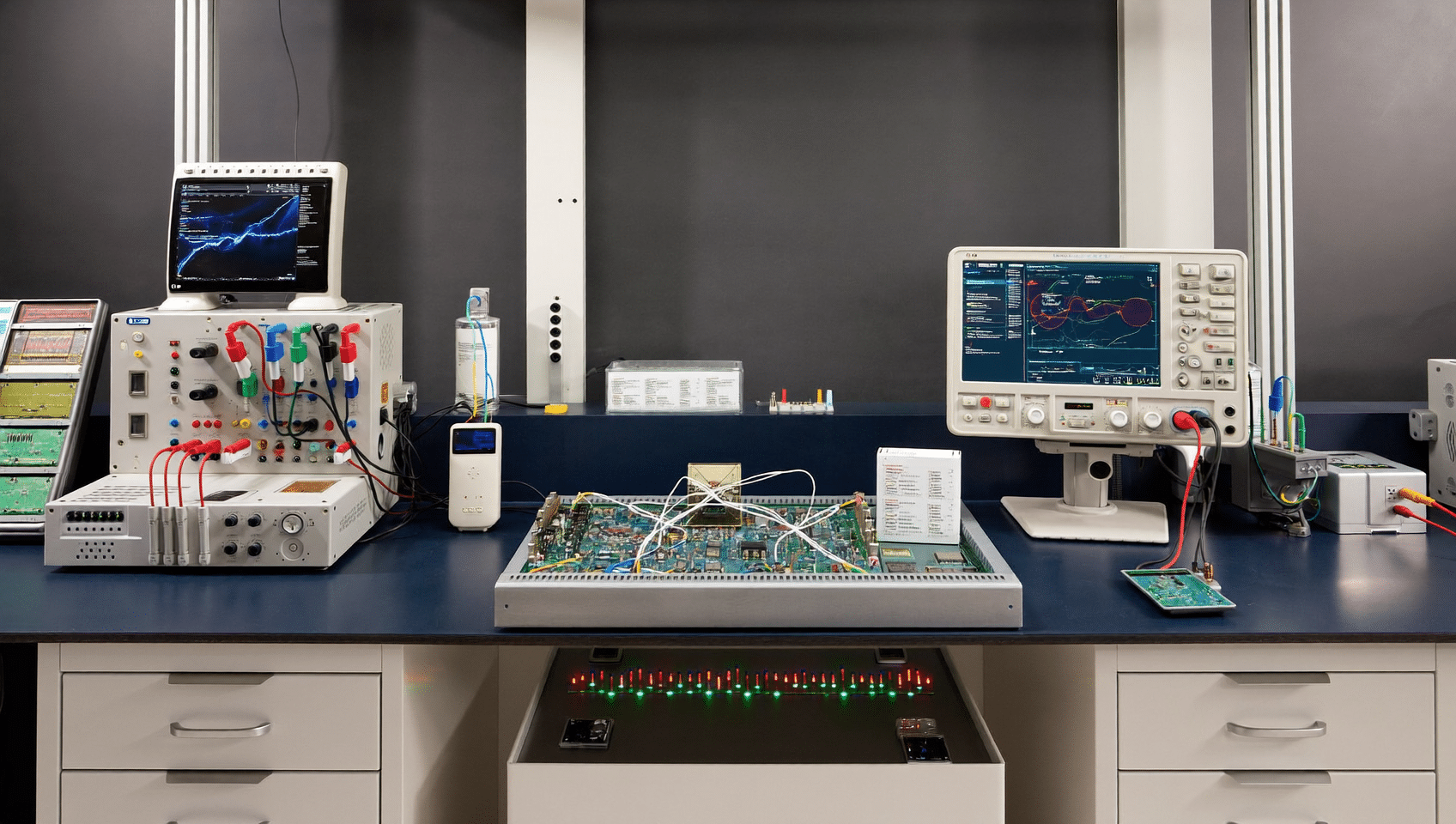
Harmonie Design Labs provides laboratory validation, first-silicon bring-up, and characterization services for custom ASICs and semiconductor development programs.
We evaluate whether manufactured silicon operates according to its approved specification across defined electrical, temperature, timing, and functional conditions.
Our team can manage the complete validation program, characterize a specific function, support customer-led bring-up, or investigate unexpected first-silicon behaviour.
- First-silicon bring-up and initial power-on
- Evaluation board and test-fixture development
- Functional validation and register-level testing
- Electrical characterization
- Temperature characterization
- Supply and operating-condition testing
- Timing and performance measurement
- Automated measurement and data acquisition
- Failure analysis and technical debugging
- Validation reporting and engineering documentation
- Specification compliance assessment
- Production-test and next-revision support
Silicon validation begins with a controlled bring-up plan
Silicon returned from manufacturing must be evaluated systematically before full characterization begins.
Initial power sequencing, current consumption, clock behaviour, interfaces, register access, test modes, and basic functional paths must be confirmed in a controlled order.
Harmonie Design Labs defines the validation environment around the IC specification and intended application. Test hardware, measurement methods, operating conditions, and acceptance criteria are prepared before extensive laboratory testing begins.
Prepare the Validation Environment
We review the IC specification, package, pinout, power domains, interfaces, test modes, operating conditions, and expected performance.
Bring Up and Characterize the Silicon
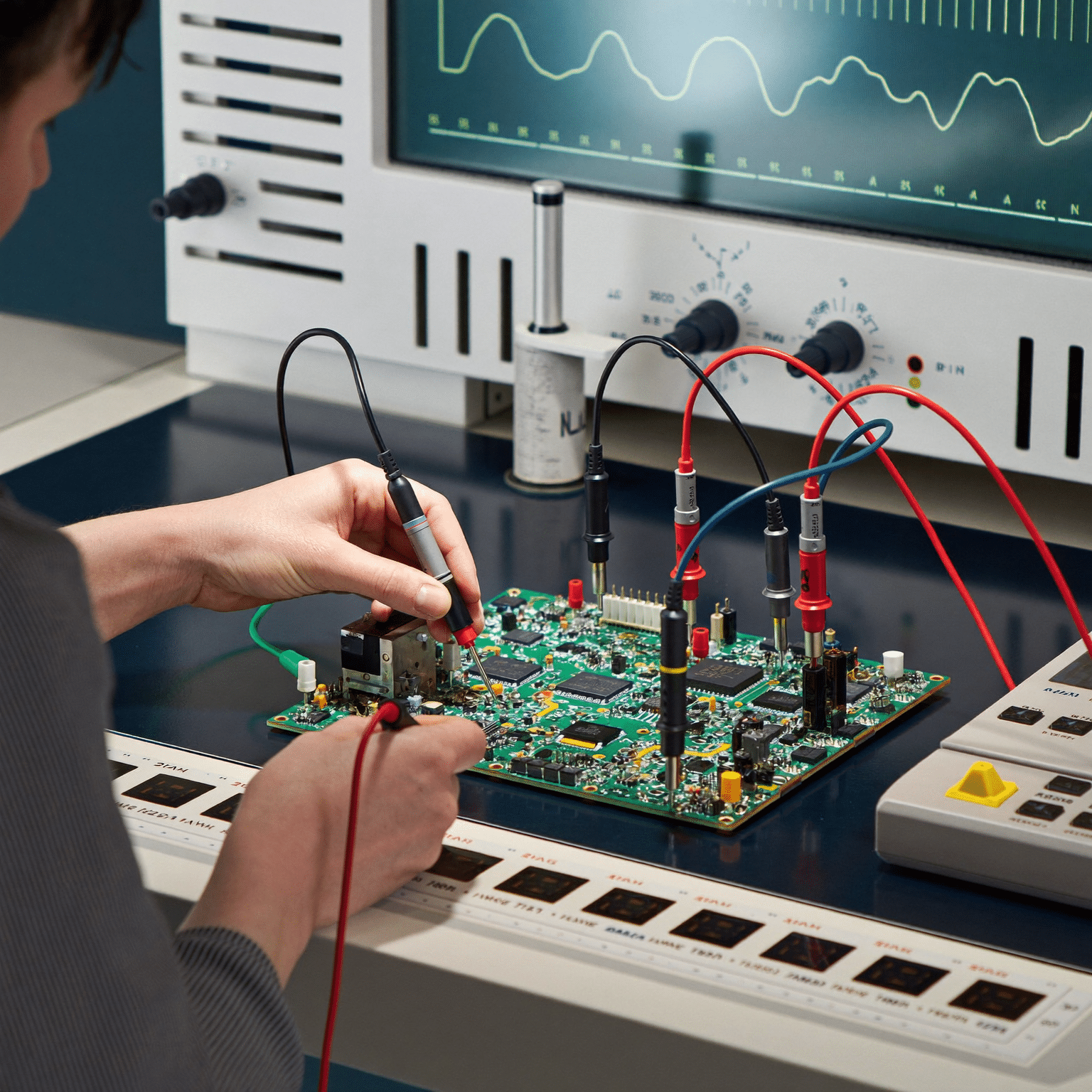
The device is powered and exercised through a controlled sequence.We confirm fundamental operation before progressing to detailed measurements. Functional blocks, interfaces, timing paths, electrical parameters, temperature behaviour, and operating margins are evaluated according to the validation plan.Where practical, measurements are automated to improve repeatability, traceability, and test coverage.
Analyse and Document the Results
Measured results are compared with the approved specification and pre-silicon expectations.Unexpected behaviour is investigated using controlled experiments, additional measurements, and correlation with design and verification data.
Validation Areas
A complete validation program combines several types of laboratory testing. The final scope is defined by the IC specification and application environment.
First-Silicon Bring-Up
First-silicon bring-up establishes whether the device can be powered, controlled, and operated safely. The objective is to establish a stable foundation for detailed characterization.
Typical activities include:
- Visual and assembly inspection
- Power-rail and sequencing checks
- Initial current-consumption measurements
- Clock and reset verification
- Register and communication access
- Test-mode activation
- Basic functional checks
- Evaluation of unexpected power or interface behaviour
Functional Validation
Functional validation confirms that the manufactured device performs the required operations under real hardware conditions.
Relevant verification scenarios may be adapted into laboratory tests to improve continuity between pre-silicon and post-silicon activities.
This may include:
- Operating-mode testing
- Register and configuration validation
- Interface communication
- State-transition testing
- Error handling and recovery
- Calibration behaviour
- Interaction between functional blocks
- Comparison with the design specification
Electrical Characterization
Electrical characterization measures the device against its specified operating parameters.
Measurements are collected under controlled and documented conditions.
Depending on the IC, measurements may include:
- Supply current
- Input and output levels
- Timing behaviour
- Frequency performance
- Power consumption
- Interface margins
- Signal stability
- Response across supply conditions
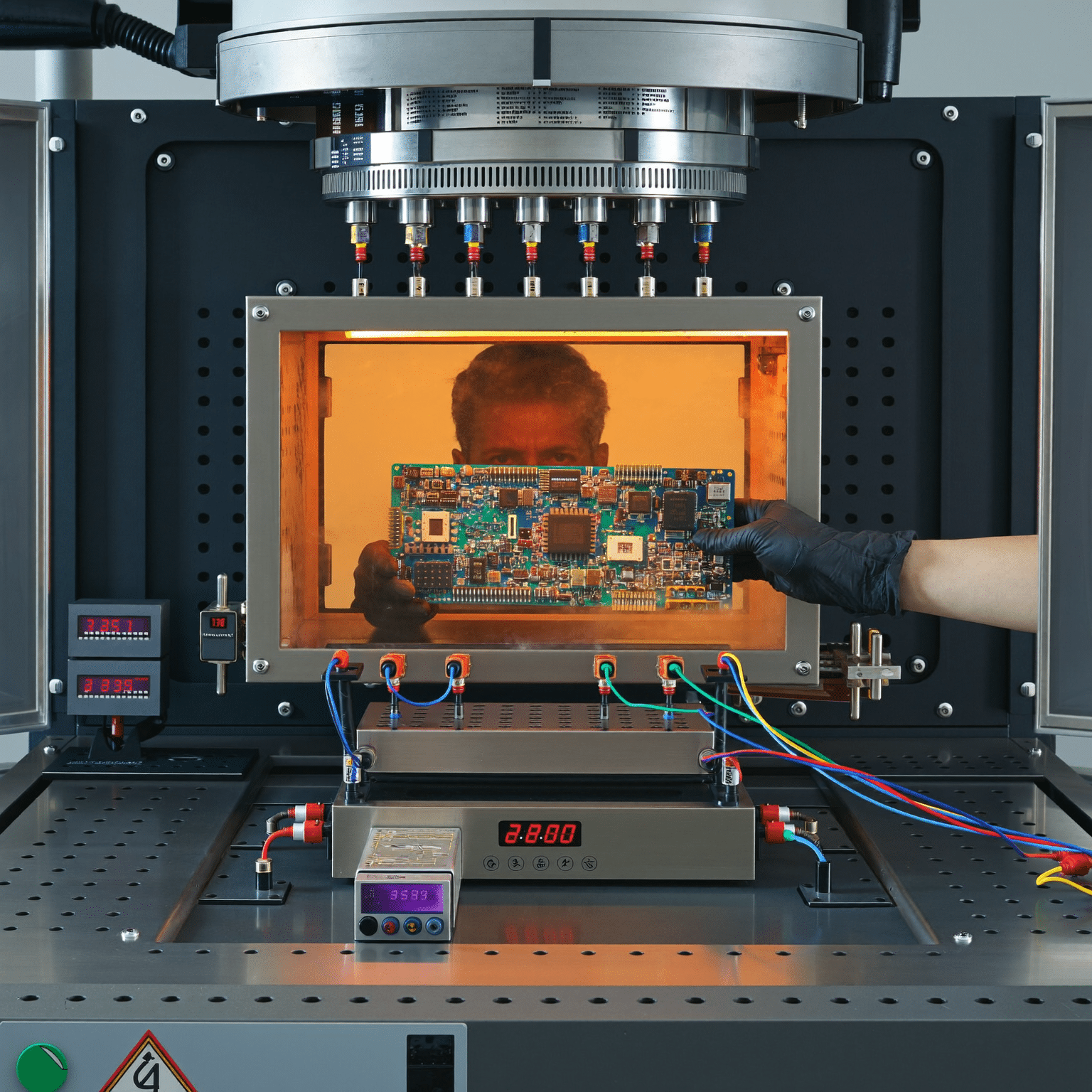
Temperature Characterization
Temperature characterization assesses how the device behaves across its intended operating range.
The exact temperature profile is defined according to the application, package, test hardware, and project requirements.
The validation plan may evaluate:
- Startup and shutdown behaviour
- Functional operation
- Electrical parameter variation
- Timing stability
- Current consumption
- Calibration performance
- Communication interfaces
- Repeatability across thermal cycles
Flexible Engagement Models
Harmonie Design Labs supports different validation models depending on the customer’s internal resources and project stage.
Complete Silicon Validation
We manage the validation program from initial planning and first power-on through characterization, analysis, and final reporting.
First-Silicon Bring-Up Support
We support the initial bring-up phase, establish basic operation, investigate unexpected behaviour, and help prepare the wider characterization program.
Targeted Characterization
We evaluate a defined function, parameter, temperature range, interface, or operating condition.
Independent Validation
We provide an independent assessment of silicon developed by another internal or external design team.
Customer-Team Extension
Our engineers work with the customer’s existing laboratory team, equipment, test software, and reporting structure.
Debug and Failure Investigation
We investigate devices that do not meet expected behaviour or specification.
The scope may include electrical measurements, interface analysis, controlled operating-condition changes, design correlation, and ECO recommendations.
From Verification to Physical Measurement
Verification and Lab Validation are separate but connected disciplines.
Verification assesses the design before manufacturing through simulation, assertions, formal analysis, and coverage.
Lab Validation evaluates the physical device after manufacturing through measurement and controlled experiments.
Connecting these activities provides several advantages:
- Verification scenarios can inform laboratory test cases
- Expected values can be compared with measured behaviour
- Silicon findings can improve verification environments
- Unexpected results can be traced back to architecture or implementation
- Test programs can be refined for future revisions
- Design assumptions can be confirmed with physical evidence
Frequently asked questions
Yes. We can prepare and execute a controlled first-silicon bring-up plan covering power sequencing, current monitoring, clocks, resets, interfaces, registers, and basic functionality.
Yes. Depending on the engagement, we can define or develop the evaluation hardware required for bring-up and characterization. The scope may include schematics, board requirements, interfaces, fixtures, and measurement access.
Yes. We can perform targeted validation or characterization for a specific block, interface, timing function, temperature range, or electrical parameter.
Yes. We can define and execute temperature-characterization activities according to the device specification, package, test environment, and intended operating profile.
Yes. We can support debugging through controlled measurements, test-sequence modification, interface analysis, comparison with simulation results, and design correlation.
Yes. We can adapt to the customer’s evaluation boards, test equipment, automation environment, measurement procedures, and reporting requirements.
Lab Validation and production testing are related but different activities. We can provide characterization data, test recommendations, limits, and engineering input for production-test development. Final production-test implementation depends on the agreed project scope and manufacturing environment.