

Harmonie Design Labs is a mixed-signal IC design company focused on the design and development of high-temperature integrated circuits. By combining deep semiconductor expertise with leading foundry and industry partners, we deliver advanced silicon solutions for demanding applications.

High-temperature silicon for mission-critical systems.

Custom silicon, end to end.
We design and validate ASICs built around your requirements. High-temperature operation is our specialty, but the same engineering applies to any design where accuracy has to survive the environment it works in.
01.
ASIC Design
Application-specific integrated circuits engineered around your system requirements, performance targets and reliability profile.
Explore ASIC Design02.
High-Temperature ICs
Custom silicon for operating conditions where standard commercial and industrial parts cannot maintain accuracy, stability.
Explore High-Temperature ICs03.
TDC-Based Solutions
Picosecond-resolution timing architectures for ToF, ultrasonic measurement, precision instrumentation, and sensor systems.
Explore TDC Solutions04.
Digital / RTL Design
Synthesizable digital IP, RTL development, and digital backend support from specification through GDSII handoff.
Explore Digital Design05.
Verification
Functional, constrained-random, formal, and mixed-signal verification designed to catch issues before silicon does.
Explore Verification06.
Lab Validation
First-silicon bring-up, electrical characterization, temperature testing, and production-readiness validation.
Explore Lab Validation07.
Embedded & FPGA
Firmware, FPGA prototyping and hardware-software integration for systems built around custom silicon.
Explore Embedded & FPGAEngineering depth for the hardest silicon problems.
High-Temperature Capability
We specialize in IC design for ambient temperatures that conventional silicon cannot handle. Our circuits stay functional and accurate where standard parts derate or fail.
TDC Expertise
Time-to-Digital Converter design is one of our core competencies. We develop TDC-based solutions for Time-of-Flight, ultrasonic measurement, precision timing, and sensor systems.
Veteran Engineering Team
Our core team brings more than two decades of ASIC, mixed-signal, and verification experience backed by a proven track record of successfully completed silicon projects.
Engineered for industries where electronics have to survive.
We design custom silicon for sectors where temperature, vibration, pressure, electrical noise, and long operating lifetimes push standard components beyond their limits.

Oil & Gas
High-temperature ICs for downhole tools, drilling instrumentation, acoustic measurement, and surface electronics operating under extreme pressure and heat.
Explore Oil & Gas
Mining
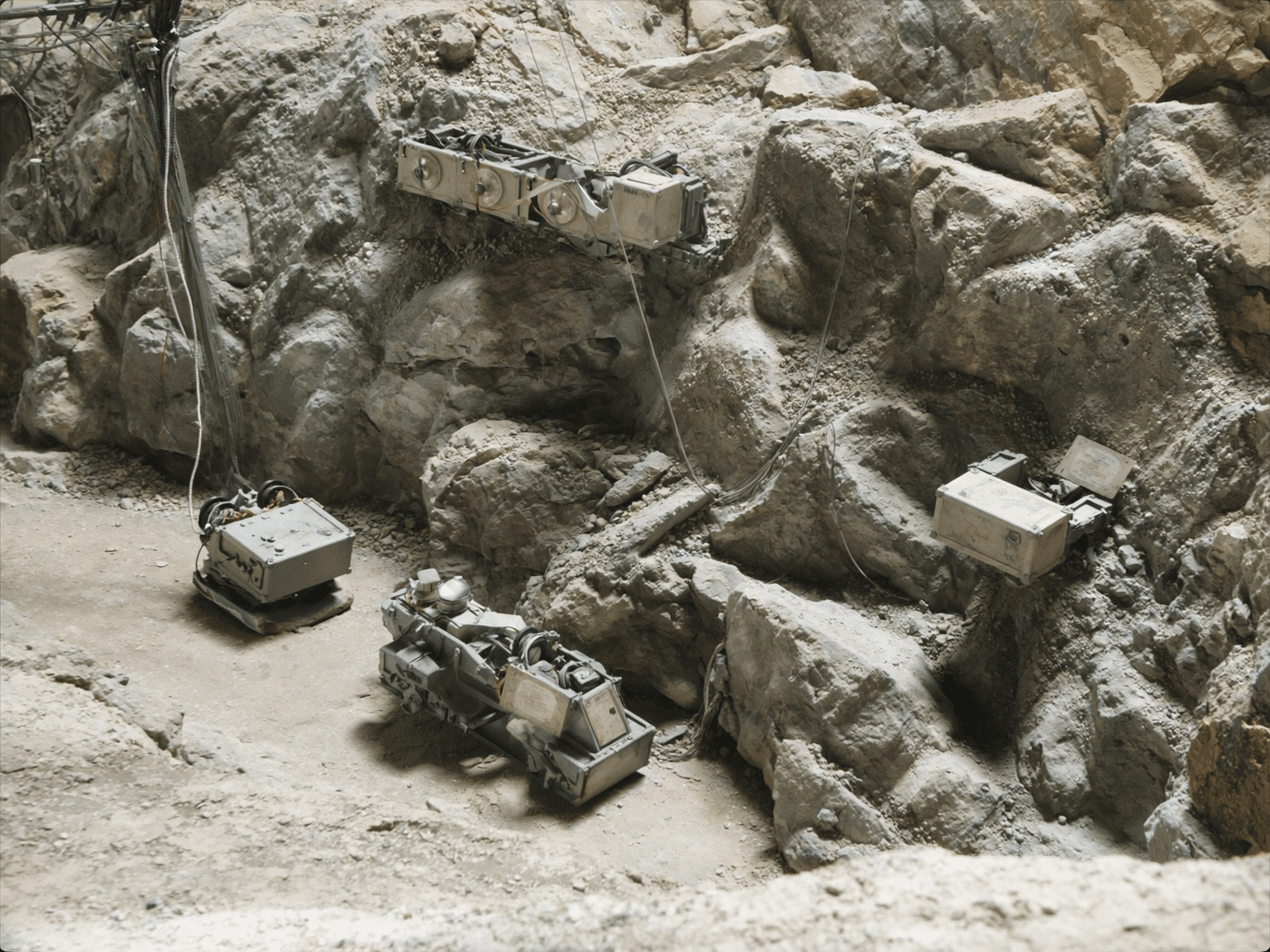
Rugged sensor, monitoring, and control electronics for underground and surface mining environments where dust, vibration, humidity, and long service life matter.
Explore Mining

Industrial Automation
Custom ICs for factory-floor electronics, including sensor interfaces, process measurement, motor control, and systems exposed to electrical noise and temperature drift.
Explore Industrial Automation
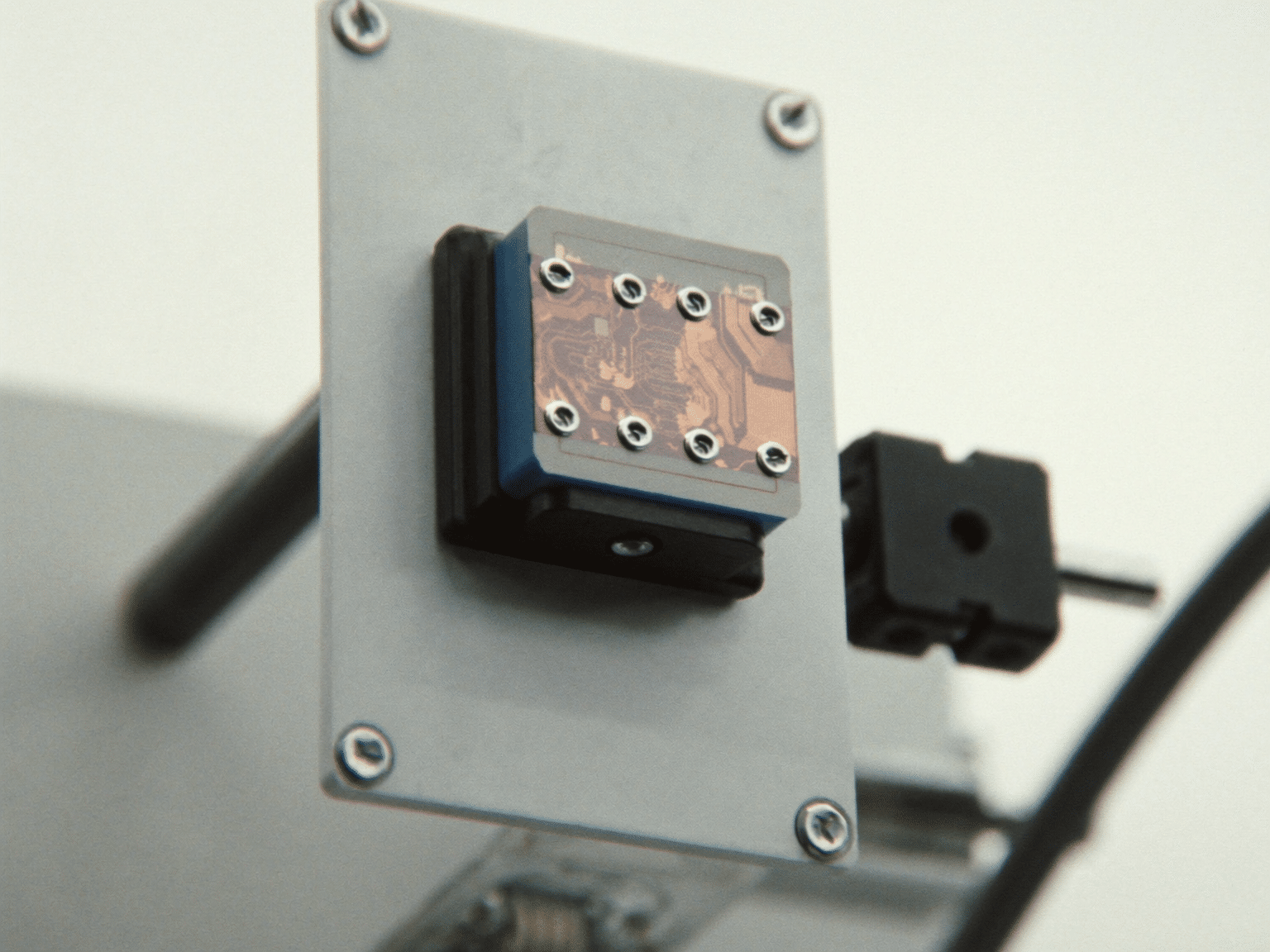
Sensors
Signal-conditioning and interface ICs for temperature, pressure, flow, ultrasonic, ToF, position, and proximity sensor systems.
Explore Sensor ICs
Automotive
Application-specific ICs for non-safety-critical automotive sub-systems where high-temperature performance, lifetime stability, and reliable supply are required.
Explore Automotive
Reliable silicon for the world's most demanding environments.
We design custom silicon for sectors where temperature, vibration, electrical noise, and long operating lifetimes push standard components beyond their limits.
We don't only design high-temperature silicon. We ship it.
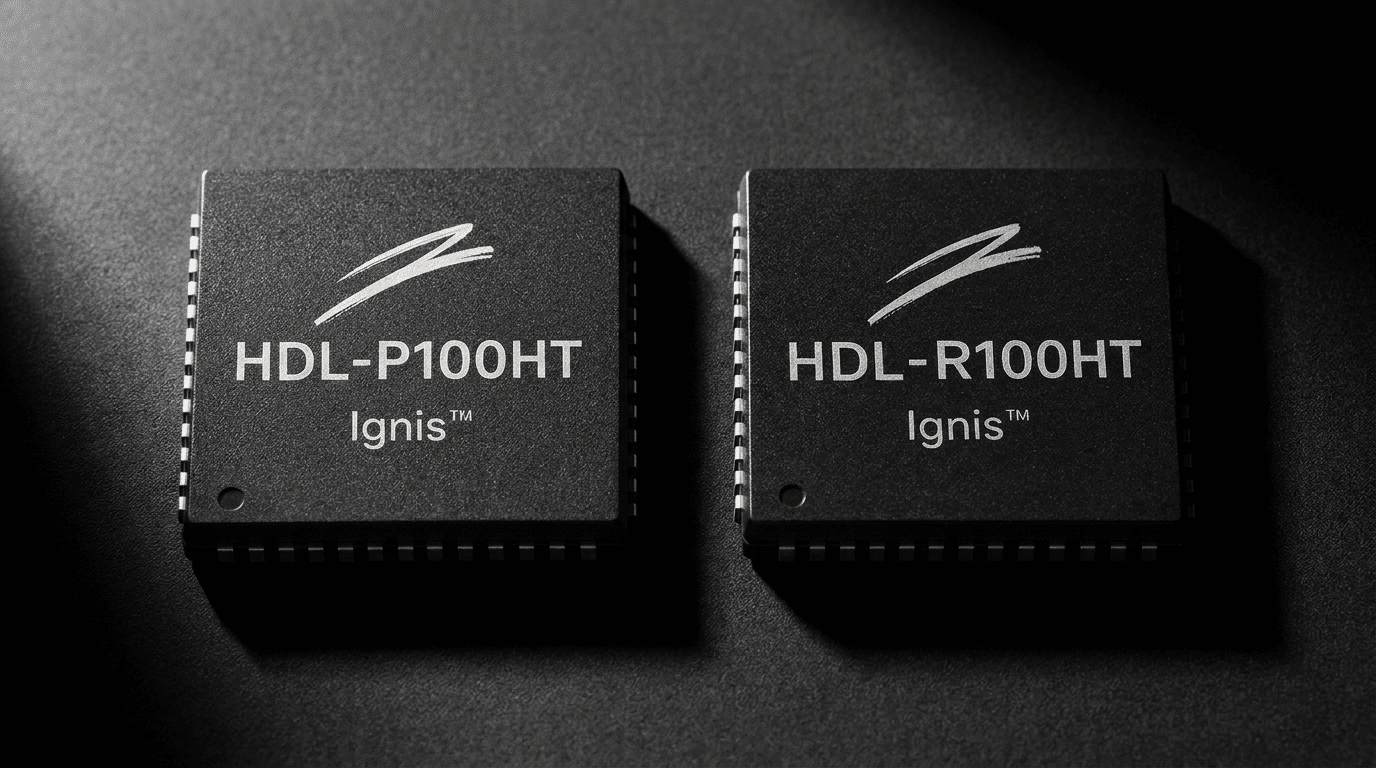
Ignis™ is our own family of integrated circuits for harsh environments, built on the same platform we use for customer projects, and characterised in the same lab. A RISC-V processor rated to 200 °C, and a resistance-to-digital converter that limits injected measurement energy to the nanojoule range.
Specification & Architecture
We start by reviewing your system requirements, operating conditions, interfaces, power targets, reliability goals, and constraints. Then we translate them into a feasible silicon architecture.
Design & Implementation
Our team develops the analog, digital, and mixed-signal blocks using industry-standard design flows, with structured design reviews before integration.
Verification
We verify the design through directed tests, constrained-random verification, coverage closure, and formal methods where they add value.
Tape-Out Coordination
We support physical sign-off, DRC/LVS closure, mask data preparation, and coordination with foundry, packaging, and manufacturing partners.
Lab Validation & Bring-Up
We bring first silicon to life, characterize performance across voltage and temperature, and prepare the design for production-readiness decisions.
From specification to validated silicon.
We keep engineers involved from the first technical discussion to lab characterization. That means fewer assumptions, clearer decisions, and a design flow built around the real operating conditions of your system.


Engineering notes from the design lab.
Practical articles on high-temperature IC design, TDC architecture, mixed-signal engineering, verification, and the design decisions that turn specifications into validated silicon.
Find answers to the common questions
Yes. We sign a mutual NDA before any technical discussion. All initial consultations, spec reviews, and feasibility assessments are confidential by default.
We engage on projects ranging from a single design block (e.g., a TDC IP) to full-chip ASICs. The minimum engagement that makes sense for both sides is typically a focused IP-block design or a verification effort spanning 8–12 weeks
We work primarily in the Cadence flow. For technology nodes, we have experience from mature high-voltage nodes typical of high-temperature applications, down to standard low-power digital nodes.
No. High temperature is our specialty, but a significant portion of our work is standard-temperature ASIC and mixed-signal design. The same engineering rigor applies regardless of operating environment.